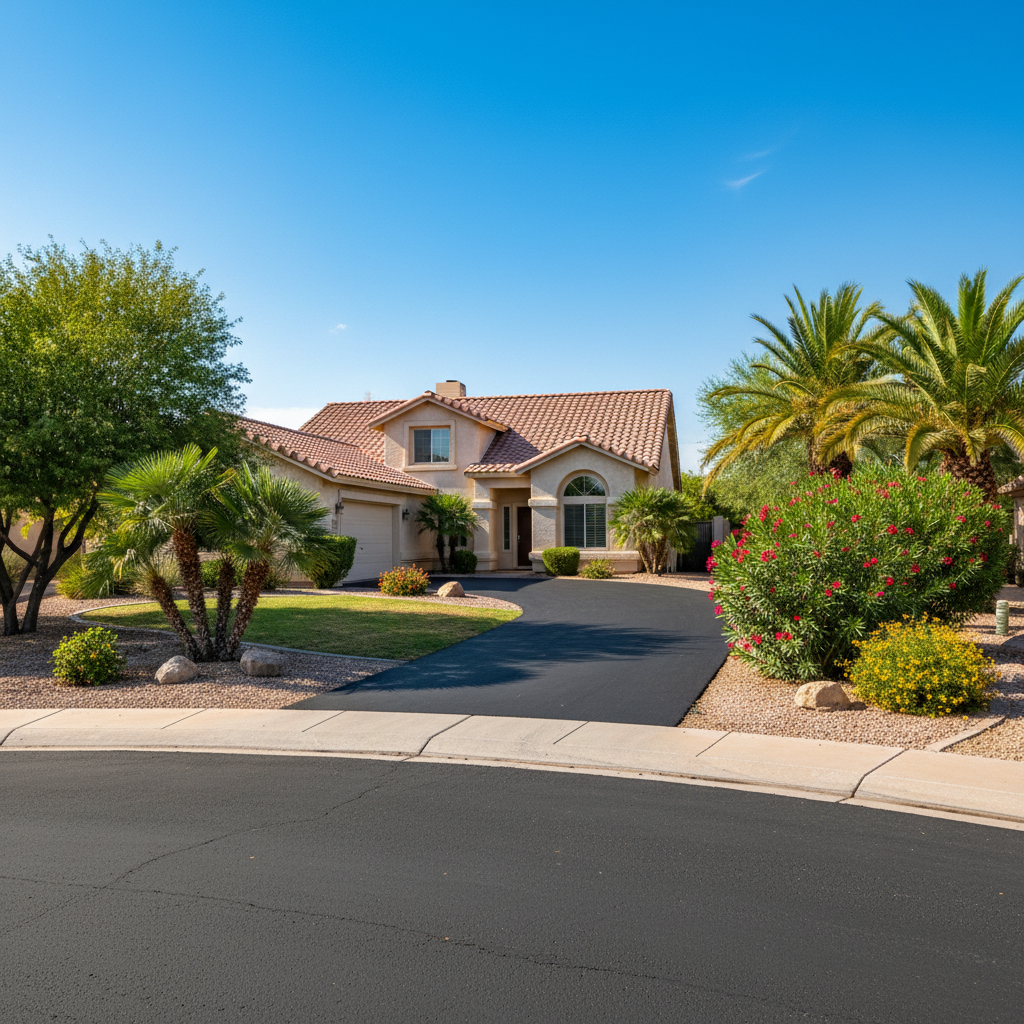
You've got an asphalt driveway, and you live in Phoenix. That means your driveway lives a tough life. It's not like asphalt in, say, Seattle, where it's mostly just wet and cool. Here, we're talking about extreme heat, UV radiation, and then sudden, heavy monsoon downpours. It's a combination that can really age your asphalt fast if you don't stay on top of things.
Understanding Phoenix Weather & Your Driveway
Our climate isn't just hot; it's a specific kind of hot that impacts asphalt differently. The intense summer sun bakes the oils out of the asphalt, making it brittle and prone to cracking. Think about how dry your skin gets if you're out in the sun all day without protection – it's kind of similar for your driveway. Then, when the monsoon hits, those sudden temperature drops and heavy rains can exploit any existing cracks, letting water seep underneath and erode the base layer. That's when you start seeing potholes and alligator cracking.
I've seen driveways in places like Sun City or Paradise Valley that are only a few years old but look twice their age because they weren't properly maintained for our specific conditions. It's not just about patching cracks; it's about understanding the cycle of damage here.
When to Schedule Asphalt Work in Phoenix
Timing is everything when it comes to asphalt, especially here. You can't just pave or sealcoat whenever you feel like it; the weather has to cooperate. For major paving projects, like installing a new driveway or a significant overlay, you're usually looking at the cooler months. That means roughly October through April. The asphalt needs to cure properly, and extreme heat can cause issues with compaction and how the materials bind. We need temperatures that allow the asphalt to be pliable enough to work with but not so hot that it sets too quickly or becomes unstable.
For sealcoating, it's a bit more flexible, but still, you want to avoid the peak of summer. Spring (March-May) and Fall (September-November) are usually ideal. You need consistent temperatures above 50°F for at least 24 hours after application, and ideally, no rain in the forecast. Trying to sealcoat when it's 115°F out is just asking for trouble – the material cures too fast, doesn't penetrate properly, and you end up with a less durable finish. On the flip side, doing it when it's too cold means it won't cure at all.
Weather Conditions That Affect the Job
Beyond just temperature, a few other things play a big role:
- Humidity: Believe it or not, even in our dry climate, humidity can be a factor. For sealcoating, too much humidity can slow down the drying process significantly.
- Rain: This one's obvious. You can't pave or sealcoat on a wet surface, and you can't have rain immediately after. It washes away the material, ruins the bond, and you've wasted time and money. We always check the forecast carefully, especially during monsoon season.
- Wind: High winds can be a nuisance for sealcoating. They can blow dust and debris onto the fresh surface, and they can also accelerate drying too much, leading to an uneven finish.
- Ground Temperature: This isn't always the same as air temperature. The ground retains heat, and for paving, we need to make sure the sub-base is at the right temperature for proper compaction and bonding of the new asphalt.
Protecting Your Investment Year-Round
So, you've got a good driveway, or you're about to get one. How do you keep it that way? It's about proactive care, not just reactive repairs.
- Regular Cleaning: Sweep off dirt, leaves, and especially any oil or chemical spills immediately. Our desert dust can be abrasive, and chemicals break down the asphalt binder.
- Crack Sealing: This is probably the most important thing you can do. Small cracks are inevitable, but if you seal them quickly, you prevent water from getting underneath and causing bigger, more expensive problems. I always tell folks, a dollar spent on crack sealing saves you ten on patching later.
- Sealcoating: Every 2-3 years, depending on traffic and sun exposure, a fresh sealcoat is your driveway's best friend. It replenishes those lost oils, protects against UV rays, and provides a fresh, black surface that looks great and repels water. It's like sunscreen and a moisturizer for your asphalt.
- Avoid Heavy Loads: If you've got an RV, a heavy trailer, or you're doing a big landscaping project, try to park heavy vehicles on concrete or a reinforced section if possible. Repeated heavy loads can cause rutting and depressions, especially in our soft desert soils.
- Proper Drainage: Make sure water isn't pooling on your driveway. If you've got areas where water collects, it's going to accelerate deterioration. Sometimes it's a simple fix, like clearing a drain, other times it might need a small repair to improve the slope.
Look, your driveway is a significant part of your property's curb appeal and functionality. Here at Progressive Asphalt Solutions, we've been working with Phoenix asphalt for years, and we know exactly what it takes to make it last in this unique environment. Don't wait until you've got major potholes to think about it. A little attention throughout the year, timed right, goes a long way.