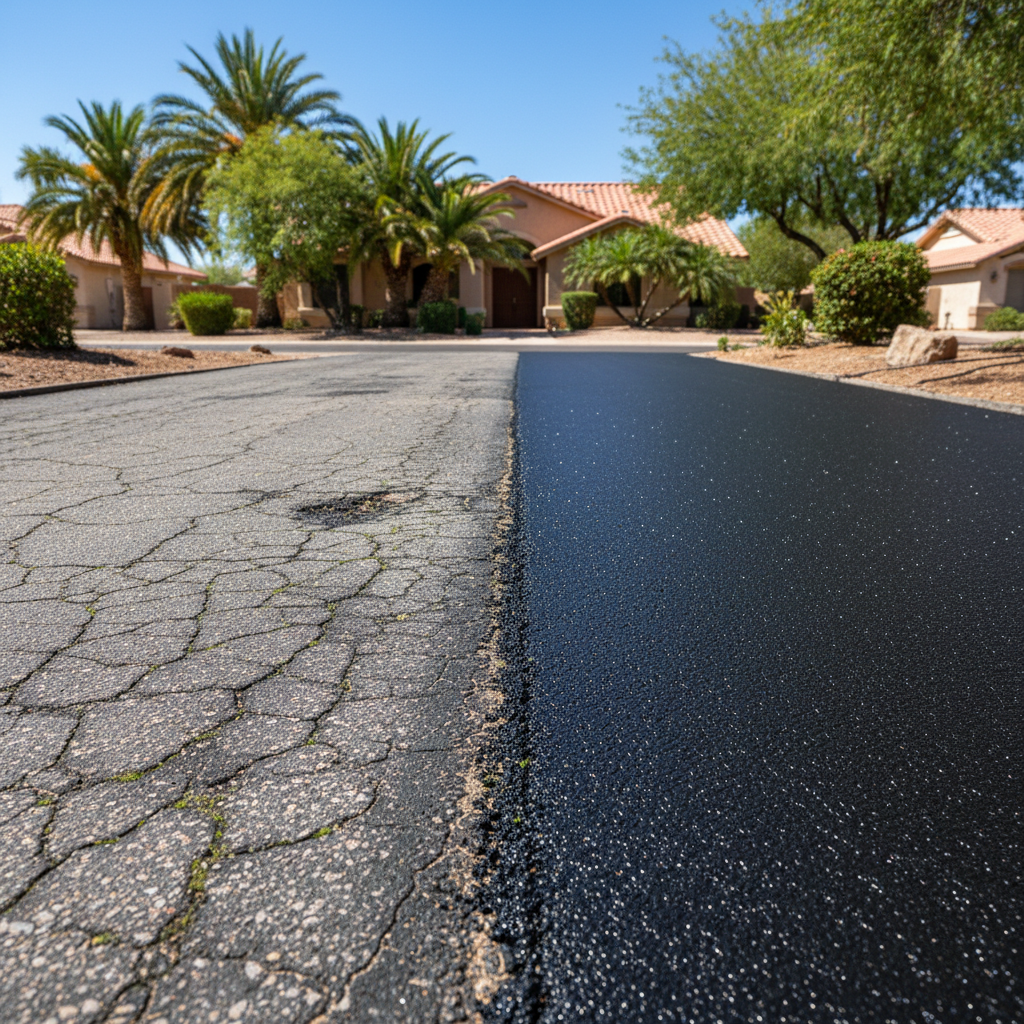
Is that Phoenix driveway of yours looking a bit rough? Cracks, potholes, faded color – it’s not just an eyesore, you know, it’s a real trip hazard. When things get to that point, a lot of homeowners start wondering if they can just patch it up or if they need to rip it all out and start fresh. For a seriously worn-out asphalt driveway, you’ve really got two main options: an asphalt overlay or a full asphalt replacement. Let’s break down what each means for your home right here in the Valley.
What's an Asphalt Overlay?
Think of an asphalt overlay like giving your driveway a fresh, new skin. We don’t tear out the old stuff. Instead, we clean the existing asphalt, fix any big cracks or potholes, and then put a new layer of hot asphalt right on top. It’s usually about 1.5 to 2 inches thick. This is a great way to refresh the look and extend the life of a driveway that’s still solid underneath but just looks terrible on the surface.
What's a Full Asphalt Replacement?
This is exactly what it sounds like, plain and simple. We come in, completely remove the old asphalt, dig down to the sub-base, and often even rework that base layer. Then, we lay down entirely new asphalt, usually in two layers – a binder course and a surface course. This is a much more involved process, essentially building a brand-new driveway from the ground up.
Cost: Where Does Your Wallet Stand?
This is usually the first question I get, and it’s a big one, isn't it? An asphalt overlay is almost always going to be significantly cheaper upfront than a full replacement. You save a ton on excavation, getting rid of old material, and the amount of new asphalt needed. For a typical residential driveway, you could be looking at half the cost, sometimes even less, for an overlay compared to a full tear-out and replace. That said, if your sub-base is shot, an overlay is just putting a band-aid on a broken leg, and you’ll end up paying more in the long run.
Durability & Lifespan: What's Going to Last?
A full asphalt replacement, done right, will give you the longest lifespan. You’re starting with a completely new, properly engineered base and fresh asphalt. You can expect it to last 15-20 years, sometimes even more, especially with good maintenance like sealcoating every few years. An overlay, on the other hand, typically lasts 7-10 years. Its lifespan really depends on how good the existing asphalt underneath is. If there are deep structural issues that weren't caught or couldn't be fixed, those problems will eventually show through the new overlay – we call it